In stock
Bestseller
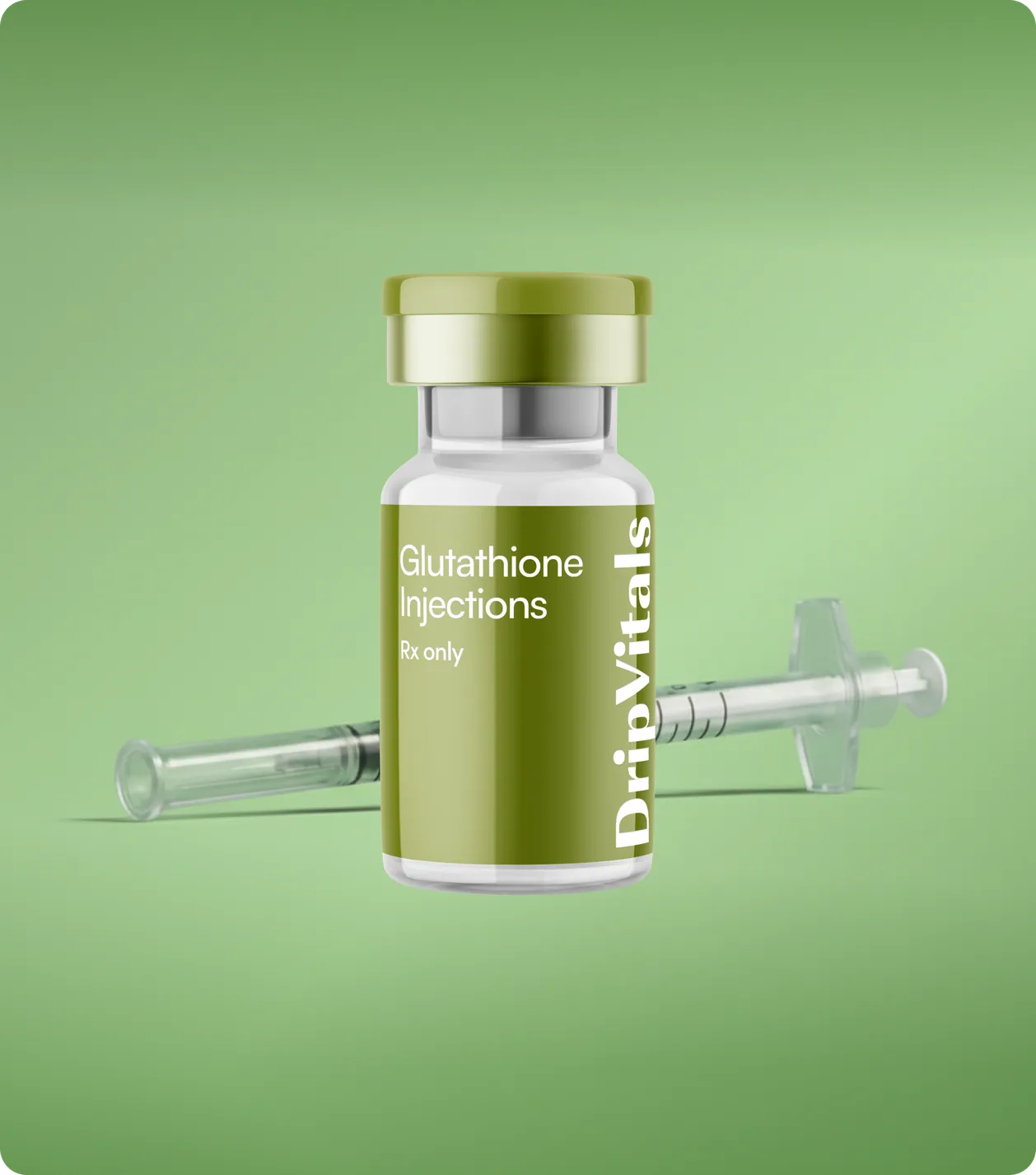
Glutathione Injections Online
as low as $119/mo*
on a 6-month plan; $299/mo month-to-month · see pricing
Glutathione is an antioxidant your body makes naturally. Explore clinician-guided glutathione injection therapy — studied for antioxidant support, skin radiance, and detoxification pathways — with transparent pricing, online provider review, and licensed pharmacy fulfillment.
Glutathione injections are not a substitute for medical care, sun protection, diet, or exercise, and are not a treatment for any disease. Treatment is available only after review by a licensed healthcare provider. Individual results vary. Compounded medications are not FDA-approved; FDA does not review compounded medications for safety, effectiveness, or quality before they are marketed. Available after online provider review, if prescribed.
Glutathione is a naturally occurring antioxidant found in every cell of the body.
Weekly at-home injection; home injection kit included.
Free shipping in discreet packaging.
What is Glutathione?
Glutathione refers to nutrients that support the body’s normal oxidative-stress defense processes. Glutathione injections are sometimes used as part of a clinician-guided wellness or weight-management plan, but they are not a substitute for diet, exercise, or treatment of an underlying medical condition.
What are the potential benefits of Glutathione injections?
Glutathione injections are discussed in the context of weight management, and healthy aging. Evidence for specific clinical outcomes is still evolving, and individual results vary. A licensed provider can help set realistic expectations.
What is the difference between oral Glutathione supplements and injections?
Injections may offer different absorption characteristics than oral routes, though the clinical significance is still being studied. Your provider can explain trade-offs based on your goals and medical history.
Compounded medications are not FDA-approved. The FDA does not review compounded medications for safety, effectiveness, or quality before they are marketed. A licensed provider determines whether a compounded medication is appropriate based on an individual patient’s medical needs.
Provider-reviewed
Licensed pharmacy fulfillment
Free discreet shipping

Feel stronger and pursue healthy aging, with clinician guidance.
The glutathione program is designed to support cellular energy and to help you pursue healthy-aging goals with clinician guidance.
glutathione (Nicotinamide Adenine Dinucleotide) is a molecule found in every cell of your body and is essential to cellular energy and repair. Research shows glutathione levels decline naturally as we age, which is why some patients explore replenishing it. A licensed provider can help determine whether glutathione therapy is appropriate for you.
The basics
What Are Glutathione Injections?
Glutathione injections are a prescription therapy that deliver glutathione — a naturally occurring antioxidant — directly into the body as a subcutaneous or intramuscular injection, as an alternative to oral glutathione supplements or in-clinic IV drips.
What Glutathione Is
Glutathione is a small molecule (a tripeptide of the amino acids glutamate, cysteine, and glycine) that the body produces in every cell. It is one of the body’s primary antioxidants, meaning it helps neutralize reactive molecules called free radicals, and it participates in the liver’s natural detoxification pathways. In published reviews of cell biology, glutathione is described as a central redox factor and enzymatic cofactor that functions across a wide range of cellular processes (Covarrubias et al., 2021).
How it is used
Because oral glutathione is broken down significantly during digestion, injections are sometimes used to deliver it more directly. Glutathione therapy is used to support antioxidant status and is not a treatment for any specific disease. A licensed provider determines whether it is appropriate for your goals and health history.
Why a provider consultation matters
Glutathione injections are available only by prescription. A licensed provider reviews your medical history, current medications, and goals to determine whether treatment is appropriate and to set a safe plan. Much of the evidence on glutathione comes from laboratory and early clinical research, so a clinician can help you understand what is and isn’t established. You can start the online consultation here.
What are the potential benefits of Glutathione injections?

May support the body’s antioxidant defenses at the cellular level.

Studied in the context of skin radiance and even skin tone.

Involved in the liver’s natural detoxification pathways.
Benefit statements describe areas studied in glutathione research and are not guarantees of results. Evidence for specific clinical outcomes from subcutaneous glutathione injections is still evolving, and a licensed provider can help set realistic expectations.
Some people explore glutathione therapy for antioxidant support and skin-related wellness goals, but results vary and clinical evidence is still evolving. Glutathione injections are not approved to treat, cure, or prevent disease.
Begin your journey with DripVitals
Every wellness journey is different, and so are our customized glutathione injection treatment plans.
STEP #1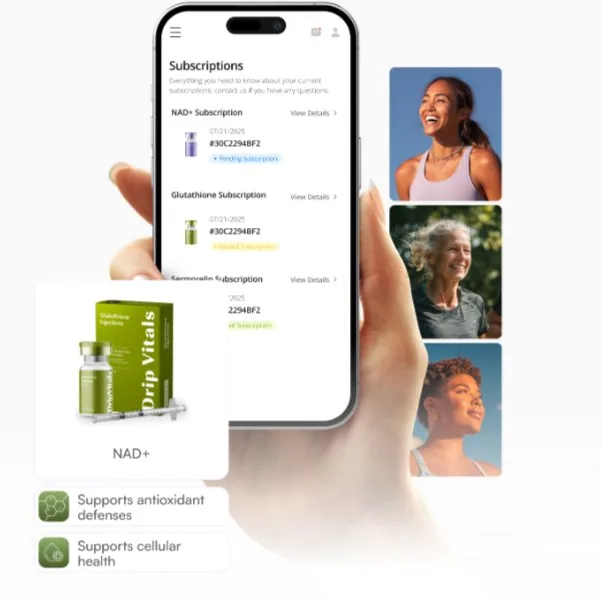
Select your treatment
Choose a plan that fits your needs and complete a medical intake form for review by providers.
STEP #2
Provider evaluation
A licensed provider reviews your history to determine if glutathione injection therapy is right for you — all online.
STEP #3
Your medication, delivered
If approved, your glutathione injections ship in 3–5 days with discreet packaging, so you can start your journey.

What the research shows about Glutathione
glutathione participates in cellular energy metabolism and is involved in biological pathways studied in healthy-aging research (Covarrubias et al., 2021; Verdin, 2015). Evidence regarding specific clinical outcomes from subcutaneous glutathione injections is still evolving (Rajman et al., 2018). A licensed provider can help determine whether treatment is appropriate for your goals and medical history.
- Acts as one of the body’s primary cellular antioxidants
- Participates in the liver’s natural detoxification pathways
- Studied in research on skin appearance and oxidative stress
- Administered as a subcutaneous or intramuscular injection
Safety
Glutathione Injection Safety, Side Effects, and Eligibility
Like any medical treatment, glutathione injections carry potential risks, and they are not appropriate for everyone. Reviewing the following with a licensed provider is an essential part of treatment.
Potential side effects
Reported effects are generally mild and may include injection-site reactions (redness, soreness, swelling), and rarely, allergic reactions. Report any unusual or persistent symptoms to your care team, and seek prompt medical attention for severe reactions such as difficulty breathing, rash, or swelling. People with asthma should be aware that glutathione has been associated with bronchospasm in some reports.
Who Should Not Use Glutathione Injections?
Consult a licensed provider before treatment if you are pregnant or breastfeeding, have asthma or a history of bronchospasm, have a known allergy to any component of the formulation, are taking other medications, or have unmanaged medical conditions. Glutathione injections are generally not recommended during pregnancy or breastfeeding, for people with a known allergy to any component of the formulation, or for those with certain medical conditions. Your provider reviews your history and will decline treatment when it is not safe or appropriate. Not everyone who applies will qualify.
Drug-interaction review
Share a complete list of your prescriptions, over-the-counter products, vitamins, and supplements during your consultation so your provider can check for potential interactions. Never start, stop, or change a medication without talking to a licensed provider.
When to contact a medical provider, and why results vary
Contact your provider if you experience side effects, have questions about dosing, or notice anything unexpected. Individual results vary based on your health, the plan prescribed, and many factors outside any single treatment, and no specific outcome is guaranteed.
Compounded medications are not FDA-approved. The FDA does not review compounded medications for safety, effectiveness, or quality before they are marketed. A licensed provider determines whether a compounded medication is appropriate based on an individual patient’s medical needs.
Comparison
Glutathione Injections vs. Oral Glutathione
The main difference is absorption. Oral glutathione is broken down substantially during digestion, so much of the dose may not reach circulation intact. Injections bypass the digestive tract, which is why a provider may suggest them when oral supplements haven’t met your goals. A licensed provider can help you decide which route fits your needs.
| Glutathione Injections | Oral Glutathione | |
|---|---|---|
| Absorption | Bypasses digestion | Reduced by digestion |
| Administration | Weekly injection | Daily capsule |
| Provider review | Required | Often none |
| Oversight | Prescription, compounded | Often unregulated supplement |
| Best for | When oral hasn’t met goals | Convenience seekers |
Neither option is universally superior — the right choice depends on your medical history and goals, and a licensed provider can help you decide.
Comparison
Glutathione Injections vs. IV Drips
Both deliver glutathione outside the digestive tract. An IV drip infuses it directly into a vein during a clinic visit, while a subcutaneous or intramuscular injection can be done at home after provider approval. IV delivery is faster into the bloodstream; injections are more convenient and lower-cost. Neither route is universally better — the right choice depends on your goals, schedule, and your provider’s guidance.

Why Choose a Clinician-Guided Glutathione Injection Treatment Plan?
- Structured dosing and check-ins with your care team
- Includes support for nutrition, sleep, and movement goals
- 24/7 access to messaging with your care team
- Monthly check-ins and as-needed dosage adjustments when clinically appropriate
- Plans designed to stay affordable across commitment lengths
Program
Glutathione Injections Cost & What’s Included
A DripVitals glutathione program is a clinician-guided subscription that bundles your care and medication. Depending on what your provider prescribes, it typically includes:
- Online medical consultation and licensed-provider review
- Your prescribed medication from a licensed pharmacy
- Home injection supplies, where applicable
- Free, discreet shipping
- Ongoing messaging access to your care team
- Follow-up check-ins with dose adjustments when clinically appropriate
- A subscription you can cancel at any time
Transparent pricing
Pricing depends on the plan you choose and what your provider prescribes. There are no hidden fees, and your dashboard shows exactly what you pay and when.
| Plan | Price | Best for |
|---|---|---|
| 6-Month plan (paid upfront or buy-now-pay-later) | $119/mo* | Lowest monthly price |
| Month-to-month | $299/mo | Maximum flexibility |
*The $119/month rate reflects a 6-month commitment paid upfront or through a buy-now-pay-later program. Actual price depends on the plan and treatment prescribed. Plans are offered as a subscription that can be canceled at any time.
Simple, transparent pricing
Both plans include your provider consultation, medication if prescribed, home injection supplies, and free discreet shipping. Cancel anytime.
MOST POPULAR
6-Month plan
$119/mo*
Paid upfront or with buy-now-pay-later. Lowest monthly price.
*The $119/month rate reflects the 6-month plan. A licensed provider determines whether treatment is appropriate based on your individual medical needs; you are not charged for medication unless prescribed. Glutathione injections are used alongside diet and exercise. Individual results vary.
Trust
Medically Reviewed

Medically reviewed by
ABAARM · FAAMM · DABOM
Hormone OptimizationObesity & Metabolic MedicineLongevity-Focused CareFunctional Medicine
This page was reviewed for medical accuracy. Treatment decisions are made by a licensed provider after reviewing each patient’s medical history.
Education & certifications
- American Board of Anti-Aging and Regenerative Medicine (ABAARM)
- Anti-Aging Metabolic Medicine, American Academy of Anti-Aging Medicine
- American Board of Obesity Medicine (DABOM)
- American Board of Internal Medicine
- The Institute for Functional Medicine
- Bioidentical Hormone Replacement Therapy certified
- Peptide Certification / Member, International Peptide Society
- Integrative Gastroenterology, Endocrinology, Cardiology & Neurology Certification, The George Washington University School of Medicine and Health Sciences
- Member, The American Academy of Anti-Aging Medicine (A4M)
- Member, American College of Physicians
Evidence
Clinical References and Further Reading
These sources discuss glutathione biochemistry and antioxidant function. They describe general research and do not establish specific clinical outcomes from this injection program.
- Glutathione: overview of its protective roles, measurement, and biosynthesisForman HJ, Zhang H, Rinna A. Mol Aspects Med. 2009;30(1-2):1–12.
- Glutathione: a review on biotechnological production and its rolePizzorno J. Integr Med (Encinitas). 2014;13(1):8–12.
- Glutathione and skin: a review of oral and topical useSonthalia S, et al. Indian J Dermatol Venereol Leprol. 2016;82(3):262–272.
Related: NAD+ Injections · Sermorelin · Medical Review Team · Contact
You may also like
Glutathione Injections: Frequently Asked Questions
Clear, medically reviewed answers about Glutathione injections — what they are, safety, administration, and how the program works.
What is glutathione?
Glutathione is a naturally occurring antioxidant made by the body. It helps support normal cellular protection, oxidative-stress defense, and detoxification pathways. Glutathione levels can be influenced by age, illness, nutrition, medications, and overall health. Glutathione injections are sometimes used in clinician-guided wellness programs, but they are not a substitute for medical care or treatment of an underlying condition.
What are glutathione injections?
Glutathione injections contain glutathione, a naturally occurring antioxidant involved in cellular defense and oxidative-stress support. Depending on the pharmacy and prescription, the formulation may vary. A licensed provider determines whether glutathione therapy is appropriate based on your medical history, medications, and goals.
Are glutathione injections FDA-approved?
glutathione therapy is not an FDA-approved drug for treating, curing, or preventing any disease. Compounded glutathione preparations are not reviewed or approved by the FDA for safety, effectiveness, or quality before they are marketed; they are prepared by licensed pharmacies to fill an individual prescription. A licensed provider decides whether a compounded glutathione product is appropriate for you based on your medical needs. You should discuss the regulatory status, expected benefits, and risks with your provider before starting treatment.
What are the potential side effects?
Reported side effects of glutathione injections are generally mild and may include injection-site reactions (redness, soreness, or swelling), nausea, flushing, headache, fatigue, or lightheadedness. Some people report a temporary sensation of pressure or flushing if glutathione therapy is administered too quickly. Because high-quality safety data for subcutaneous glutathione therapy is still limited, it’s especially important to report any unusual or persistent symptoms to your care team and to seek prompt medical attention for severe reactions such as difficulty breathing, chest pain, or signs of an allergic reaction.
Who should not use glutathione injections?
Glutathione injections are not appropriate for everyone. They are generally not recommended during pregnancy or breastfeeding, for people with a known allergy to any component of the formulation, or for those with certain medical conditions. Your eligibility depends on your full medical history, current medications, and health goals. A licensed provider reviews this information and will decline treatment if it isn’t safe or appropriate for you. Not everyone who applies will qualify.
Can glutathione injections interact with medications?
Possibly. Any treatment can interact with existing medications or supplements, so it’s important to share a complete list of everything you take — including prescriptions, over-the-counter products, vitamins, and herbal supplements — during your consultation. Your provider reviews this information to check for potential interactions and to confirm that glutathione therapy is appropriate alongside your current regimen. Never start, stop, or change a medication without first talking to a licensed provider.
How are glutathione injections administered?
When prescribed, glutathione injections are typically given subcutaneously into the fatty tissue of the abdomen, thigh, or upper arm, often as part of an at-home routine using a provided kit. Your provider and care team give instructions on dosing, technique, injection-site rotation, and storage. Dosing schedules vary by individual and are set by your provider. If you’re ever unsure about technique or dosing, your care team is available to help.
How is glutathione injection therapy different from glutathione IV therapy?
The main difference is the route of administration. glutathione injections are given subcutaneously and can often be done at home when prescribed, while glutathione IV therapy delivers glutathione intravenously and usually requires a clinic visit and a longer appointment. Injections tend to be more convenient and time-efficient, whereas IV therapy delivers the dose directly into the bloodstream. Neither route is universally better — the right option depends on your medical history, goals, and your provider’s recommendation.
How is an injection different from an plain glutathione shots?
Glutathione injections deliver the antioxidant glutathione directly, bypassing digestion. A licensed provider can help determine whether injectable glutathione is appropriate for your goals and health history.
What is included in the DripVitals program?
A DripVitals glutathione program typically includes your online medical consultation and provider review, your prescribed medication from a licensed pharmacy, home injection supplies where applicable, free discreet shipping, ongoing messaging access to your care team, and follow-up check-ins with dose adjustments when clinically appropriate. Plans are offered as a subscription you can cancel at any time. Exact inclusions and pricing depend on the plan and what your provider prescribes.
Is a consultation required?
Yes. glutathione injections require a prescription, so a licensed provider must review your health information before any treatment is dispensed. The consultation is completed online through a secure intake form, and your provider may follow up with questions. If treatment isn’t appropriate for you, the provider will not issue a prescription.
How is pricing determined?
Pricing depends on the plan you choose and the treatment your provider prescribes. DripVitals glutathione plans start as low as $119/month on a 6-month plan paid upfront (or via buy-now-pay-later), while a month-to-month option is $299/month. Longer commitments lower the effective monthly price. Your dashboard shows exactly what you’ll pay and when, with no hidden fees, and you can cancel your subscription at any time.
Disclaimer
Only available if prescribed after an online consultation with a healthcare provider. Benefits outlined are based on third-party studies. Plans are offered as a subscription service which can be canceled at any time. Actual product packaging may appear differently than shown. Physicians may prescribe compounded medications as needed to meet patient requirements. The FDA does not review or approve any compounded medications for safety or effectiveness. The statements on this page have not been evaluated by the FDA. Results may vary. If you notice any side effects while using this treatment, contact your healthcare provider immediately.